

The Commons: A Living Manuscript
A long table stretched through the city, inscribing resilience in the everyday gestures of pause and proximity.
At the heart of The Commons Table is a single, elemental gesture: the long table. In Mumbai, where density is democratic and the train, the street, and the festival lawn bring strangers into sudden proximity, the table becomes both symbol and stage. It stretches as a continuous line, like a manuscript written across the ground, a surface where people inscribe themselves by pausing, leaning, eating, conversing, or simply passing through. Its openness dissolves hierarchy, becoming furniture, platform, and ground at once, a commons that belongs equally to all.
The supporting structure is deliberately minimal and adaptive. A slender steel frame raises the table lightly above the earth, signalling openness without monumentality. It does not dictate behaviour but makes space for it, open-ended, porous, and responsive to those who inhabit it.
Above, the canopy takes the form of an inverted arch. It shades the table and refracts the city’s hum, while its reflective surface doubles as a screen for projection and light. Curving overhead, the arch signals welcome and collectivity. Like a vessel or a manuscript margin, it gathers fragments of sound, image, and atmosphere and returns them to the collective below. By day it is a quiet shelter; by night it becomes a shared reflector, staging Mumbai’s density as spectacle.
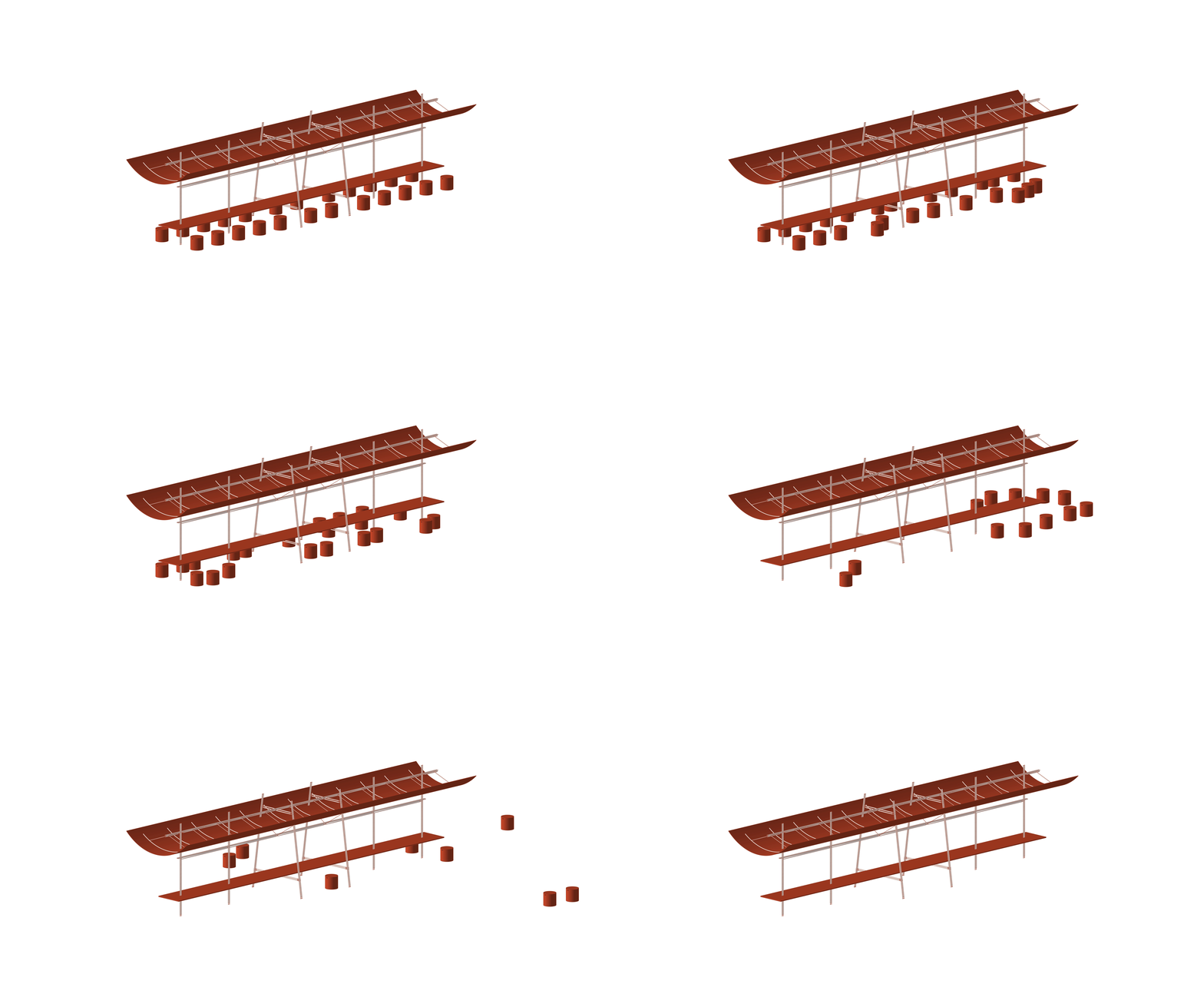

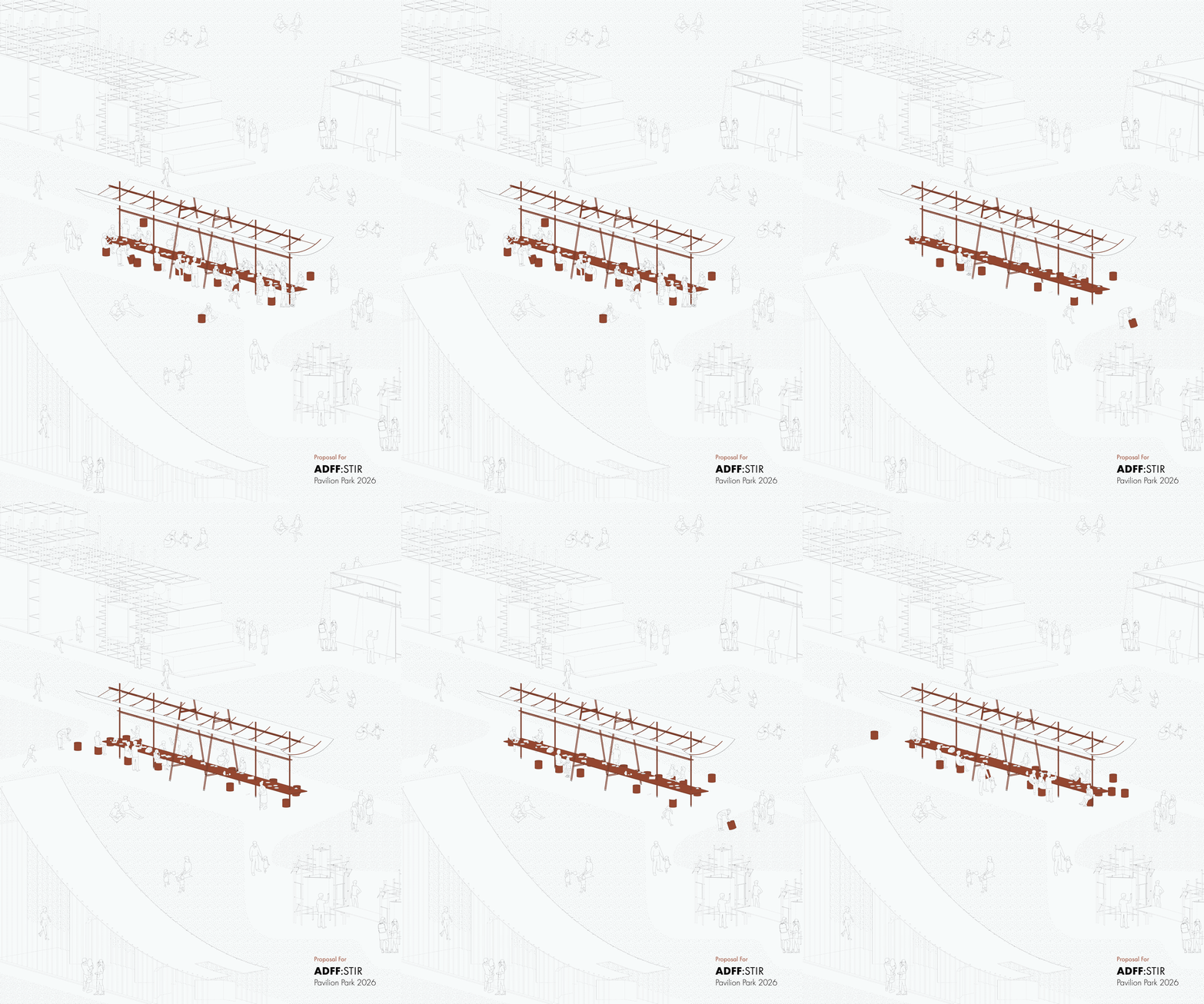


The pavilion embodies the paradox of collective isolation that defines the city. People are together yet apart, proximate yet private, always in motion yet occasionally suspended in pause. Open on all sides, with no fixed front or back, the table becomes both thoroughfare and destination, a place to linger, to host a discussion, or to simply cut across. Circulation remains democratic, as movement and event overlap, just as the city’s manuscripts overlap histories, communities, and ambitions.
Constructed of modular mild steel pipes and a lightweight GI sheet canopy, the pavilion is designed for continuity beyond the festival. Its afterlife is imagined in cultural campuses, public institutions, or community grounds, wherever a commons for gathering and reflection is needed.
